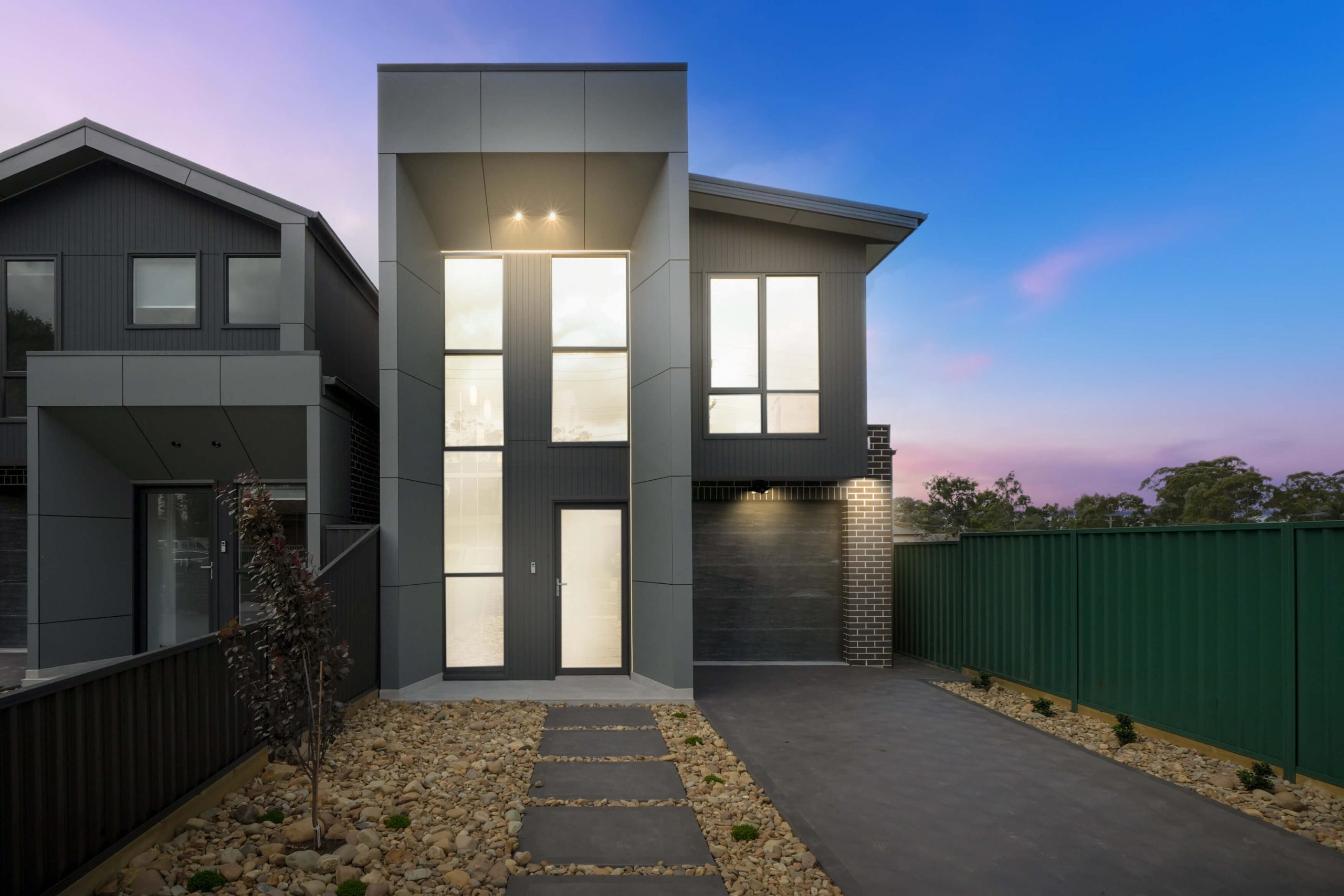
Every property listing now competes in the same place: a small screen held by a buyer who is scrolling quickly. That first image decides whether the buyer taps through or keeps moving. This is exactly why HDR real estate photography Sydney agents rely on has moved from a premium extra to a basic expectation.
The change happened quietly. Agents did not sit down and decide to adopt a new technique, and vendors never asked for it by name. Buyers simply stopped tolerating dark, uneven listing photos.
HDR stands for High Dynamic Range, and it simply means a photo that shows both the bright parts and the dark parts of a room clearly. A single camera shot cannot do this on its own. HDR solves a problem that every property has, in every suburb, on every shoot day.
This guide explains HDR in very simple language, with no technical jargon you need to memorise. You will learn how it works, why buyers respond to it, and how it fits with the rest of your listing media. If you want to see the approach applied to live listings, our real estate photography services and full photography and videography service range are a useful starting point.
HDR real estate photography is a process, not a filter. The photographer takes several photos of the same room at different brightness levels. The photographer then blends those photos into one final image that looks balanced and natural.
One photo is taken darker, so the window view and the sky stay visible. One photo is taken brighter, so the corners, floors and shadows keep their detail. A third sits in the middle and captures the room’s true colour.
When these are merged, you get an image closer to what a buyer would see standing in the room. Nothing is invented and nothing is added. The room is simply shown honestly, which is the whole point of professional property photography.
The same technique works for houses, apartments, townhouses and offices. It is used just as heavily in commercial property photography as it is in residential work. Any space with windows and interior lighting benefits from it.
Your eyes are remarkable at handling contrast. Standing in a lounge room, you can see the detail in a dark corner and the garden through the window at the same time. Your pupils adjust constantly without you noticing.
A camera cannot do that. It captures one fixed level of brightness in a single frame. Everything brighter turns into flat white, and everything darker turns into flat black.
Photographers measure this range in “stops” of light. The human eye handles somewhere around 20 stops of brightness across a scene, while a professional camera sensor captures roughly 12 to 14 stops in one frame. That gap is the entire reason HDR photography exists.
Australian light makes the gap worse, not better. Harsh midday sun, bright skies and large glass windows create extreme contrast inside a room. Careful professional photo editing and, where the property suits it, dusk and twilight photography are used to manage that contrast rather than fight it.
The process starts before a single photo is taken. The camera goes on a tripod so every frame lines up perfectly. Even a tiny movement between frames causes blur when the images are merged.
The photographer then uses exposure bracketing. This means the camera automatically takes a series of shots, each one brighter than the last, of the same view. Three to seven frames is typical, depending on how much contrast the room has.
Back at the desk, editing software blends the best part of each frame. The window comes from the dark frame, the shadows come from the bright frame, and the mid-tones come from the middle. The result is a single balanced photo.
A skilled editor then finishes the image by hand. Colours are corrected, vertical lines are straightened, and any remaining harshness is softened. You can see how that finishing stage affects the final look across our property photography portfolio, shot by our Sydney photography team.
Ten years ago, HDR was a specialist technique. Today it is the baseline because buyer expectations changed permanently. Buyers now compare your listing against dozens of others in a single sitting.
Portals also changed. Listings are displayed larger, brighter and on higher-quality screens than ever before. A dull, uneven photo that looked acceptable on an old phone now looks obviously poor.
Vendors have changed as well. They research agents online before the listing appointment and judge them on the quality of previous campaigns. Weak imagery on past listings costs agents work they never hear about.
There is a competitive reason too. When most listings in a suburb use balanced, bright imagery, a non-HDR listing stands out for the wrong reason. It reads as lower value even when the property is excellent.
HDR also supports the rest of the campaign. It gives you clean, consistent images to pair with property styling and strong professional copywriting. Good photos make good copy believable.
Most buyers decide within a second or two. They are not reading your description yet. They are reacting to the main image.
This is supported by long-running buyer research on online property listings, which found that photos are the single most valuable piece of content buyers look at, ahead of detailed property information and floor plans. Every buyer in that research used the internet during their search. The image is doing the first round of selling for you.
A dark hallway or a blown-out window sends a quiet signal. It suggests the property is smaller, older or poorly maintained. None of that may be true, but the buyer has already scrolled on.
HDR removes that risk by showing the property fairly. It pairs naturally with a clear property floor plan so buyers understand the layout immediately. The same images then carry across to social media visual content without extra work.
Interiors are where HDR earns its place. Almost every room has a window, and that window is far brighter than the walls around it. Without HDR, you must choose between a visible view and a visible room.
That choice matters commercially. A leafy outlook, a water glimpse or a city view is often part of the property’s value. If the window is pure white, that value disappears from the listing entirely.
HDR also makes rooms feel larger. Even, balanced light lets the buyer read the full depth of a space. Dark corners visually shrink a room, while lifted shadows let it breathe.
The effect is stronger again when the room is presented well. Furniture placement, decluttering and considered styling through home styling for sale give the camera something worth capturing. For empty properties, virtual staging services can add furniture digitally to a clean HDR base image.
Exteriors have the opposite problem to interiors, but it is just as damaging. The sky is extremely bright and the house sits in comparative shade. A single exposure usually gives you a white sky or a black facade.
HDR holds both. The roofline stays sharp against a blue sky, the render and brickwork keep their real colour, and the garden stays green instead of going grey. Kerb appeal survives the trip to the screen.
Timing still matters. Early morning and late afternoon light is softer and flatters most facades, which is why shoot times are planned around the direction a property faces. HDR supports good timing; it does not replace it.
For larger blocks, acreage and new estates, height tells the story better than ground level. That is where aerial photography and videography comes in, and the same bracketing approach is used in drone photography for property listings to keep skies and land equally clear.
HDR earned a bad reputation years ago for a reason. Early software produced images with glowing edges, grey skies and unnatural colour. Buyers found them strange even if they could not explain why.
Modern, realistic HDR real estate photography looks like nothing at all. The viewer does not notice a technique; they notice a bright, clean, believable room. That invisibility is the goal.
There is also an ethical line that matters in Australian real estate marketing. Photos should present a property at its best without misleading anyone about what it is. Correcting light is fair, while inventing features or removing permanent defects is not.
Getting that balance right is a judgement call made image by image during photo editing and retouching. If you are unsure what is standard practice, our frequently asked questions cover how listing images are prepared and delivered.
There is more than one way to solve the contrast problem. Some photographers use flash, firing artificial light into the room to lift the shadows. Others use HDR bracketing and let the existing light do the work.
Flash gives very clean, controlled results and handles tricky mixed lighting well. It is slower on site, needs more equipment, and can flatten the natural mood of a room. It also struggles when a property has many small rooms to cover quickly.
HDR keeps the room’s own character intact. Warm afternoon light stays warm, and shadows stay soft rather than being erased. It is faster on site, which matters when tenants or vendors are waiting.
In practice, many professionals blend both approaches depending on the property. A dark bathroom may get a burst of flash while the living room is shot purely with brackets. You can see both approaches represented across our photography service range and in twilight property photography, where controlled light and natural light have to sit together in one frame.
Most property searching now happens on a phone, often in poor viewing conditions. Buyers scroll on trains, in cafés and outdoors in daylight. Screen glare eats contrast before the buyer even registers the image.
A photo with balanced exposure survives that environment far better. Mid-tones stay readable when a screen is dimmed or washed out by sun. A dark image simply disappears under glare.
Portal compression is the second hurdle. Listing platforms resize and compress every image you upload, and heavy shadows compress poorly, producing blotchy patches. Evenly exposed HDR files hold up much better after compression.
Thumbnails matter most of all, because that is the version most buyers judge first. A bright, clear thumbnail wins the click, and the rest of the listing then has a chance to work. The same images should carry through to your social media property content and sit beside an accurate floor plan so the buyer gets a complete picture in seconds.
HDR photos are the foundation, not the entire campaign. They set the visual tone that every other asset follows. When the stills are inconsistent, the whole listing looks disorganised.
Video is the natural next layer. A walkthrough gives buyers a sense of flow and scale that photos cannot fully deliver. Colour-matched video and stills make a campaign feel deliberate and premium.
Off-the-plan and pre-construction listings need a different tool again. Renders let buyers picture a finished home before it exists, and they should match the photographic style used for completed stock.
Both layers are available alongside photography through commercial videography services and 3D visualisation and CGI. Using one supplier for all of it keeps the look consistent across the campaign.
Sydney is not one photographic environment. A terrace in the inner west, an apartment in Parramatta and a new build in Camden all present different lighting problems. HDR is the common solution across all of them.
Western Sydney and South West Sydney homes often have large open-plan living areas with wide glass doors onto a yard. That combination produces extreme contrast on sunny days. Bracketing is essential rather than optional.
Inner-city apartments face the opposite challenge of limited natural light and tight rooms. HDR lifts the shadows without making the space look artificial or hazy. The apartment reads as bright and liveable instead of cramped.
Shoots are regularly run across Campbelltown, Camden, Liverpool, Smeaton Grange and Parramatta. You can check coverage on our working locations page, or review the standard inclusions on our real estate photography Sydney page.
A typical residential shoot takes between one and two hours on site. Larger homes and commercial spaces take longer. Rushing a shoot is the fastest way to lose image quality.
Preparation does more for the final images than any camera setting. Benches should be clear, blinds open, bins hidden and personal items put away. Lights are usually turned off, because natural light through the windows gives truer colour.
The photographer will shoot each room from the angles that show the most usable space. That usually means shooting from a corner, at chest height, with vertical lines kept straight. These small habits are what separate professional work from phone photos.
Edited images are normally delivered within 24 hours, ready to upload. You can arrange a shoot through our online booking page, and the photography team will confirm the best time of day for the property’s aspect.
The most common mistake is shooting at the wrong time of day. A west-facing facade photographed at 9 am will always look flat. Light is free, but only if you use it at the right hour.
The second is mixing photo sources within one listing. A few professional images sitting beside phone snaps make the whole set look unreliable. Consistency matters more than the number of images.
The third is over-editing. Skies that are too blue, grass that is too green and walls that glow will make experienced buyers suspicious. Trust is hard to win back once it is lost.
The fourth is neglecting everything around the photos. A polished listing also needs an up-to-date agent portrait from a professional headshot session and a description that matches the imagery, which is where real estate copywriting pulls the campaign together.
It is worth being honest about the limits. HDR balances light, and that is all it does. It cannot hide a cluttered room, a stained carpet or an unmade bed.
Presentation still carries most of the weight. A tidy, well-styled home photographed simply will always beat a messy home photographed brilliantly. The camera records what is in front of it.
Weather has limits too. Heavy rain, flat grey skies and strong midday glare all reduce what any technique can achieve outdoors. Rescheduling an exterior shoot is often cheaper than trying to repair the images later.
The strongest listings treat photography as the final step, not the first one. Preparing the property through property styling services comes before shoot day, and for sites still under construction, building and construction photography tells the progress story until the home is ready to market.
Photography is one of the smallest line items in a marketing budget. It is also the item buyers interact with first and most often. The ratio of cost to influence is unusually favourable.
The simplest measure is enquiry volume in the first 72 hours. That window is when a new listing receives its highest portal exposure. Strong imagery converts that exposure into inspections.
Track saves, shares and click-through rate alongside enquiry numbers. Compare two similar listings, one with HDR imagery and one without, in the same suburb and price bracket. The pattern usually becomes obvious within a month.
Vendors notice the difference too, which affects your next listing presentation. Showing previous campaigns from our work portfolio is often more persuasive than any slide, and you can learn more about our approach on the about us page.
Done properly, no. HDR corrects the camera’s weakness, not the property’s condition. The aim is to match what a person standing in the room would actually see.
Most residential listings use between 12 and 25 images. Larger homes and commercial properties need more. Quality always beats quantity, so weak images should be removed rather than included.
Phones do apply automatic HDR, and it works reasonably well for casual photos. It cannot match a tripod, a wide professional lens and manual editing. The difference is very visible on a large listing page.
Yes, from studio apartments to warehouses and retail spaces. Any interior with windows benefits immediately. Full details on inclusions are listed in our FAQ section, and shoots can be scheduled through our booking page.
Property marketing has become a visual-first business. The photo is the shopfront, the first impression and often the only impression. HDR is simply what it takes to make that impression accurate.
It is not a trend and it is not a filter. It is a practical fix for a limitation every camera has. That is why it has quietly become standard across modern property listings.
For agents, the question is no longer whether to use HDR. The question is whether every listing you take to market is being shot to the same standard as your competitors. Consistency is where campaigns are won.
If you are ready to lift the standard of your listing imagery, explore our HDR real estate photography Sydney services or get in touch for a quote. A well-lit listing gives every property the fair start it deserves.